 Reviews

 Proudly American

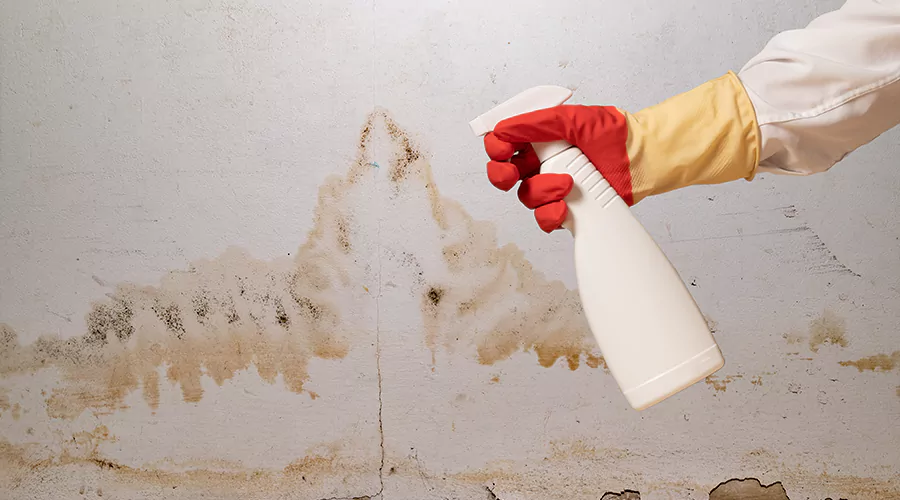
When mold causes property damage, it can stain surfaces and break down porous building materials while the underlying moisture continues damaging the structure. In 2026, mold remediation commonly costs $1,223 to $3,757 for many residential projects. Larger affected areas can reach $15,000 or more.
Mold doesn't usually appear without a moisture problem. A plumbing leak or roof failure can keep wood and drywall damp long enough for mold to grow. The EPA states that mold gradually damages the materials it grows on and can contribute to structural deterioration when moisture remains unresolved.
The visible patch may therefore be only one part of the property damage. Moisture can remain behind walls or beneath flooring after the exposed surface begins looking dry.
How Does Mold Damage a Property?
Mold damages property by growing on materials that provide an organic food source while moisture remains present. Wood and drywall are common examples. Over time, affected materials can become stained or physically deteriorated. Long-term moisture can also cause swelling and loss of strength independent of the mold itself.
The distinction matters because mold and water often damage the same material at the same time.
For example, drywall beneath a leaking window can absorb water before visible growth appears. The drywall may become soft from prolonged moisture while mold develops on its paper surface.
Commonly affected materials include:
- Drywall
- Wood framing
- Subflooring
- Carpet
- Insulation
- Ceiling tiles
- Cabinets
- Upholstered furniture
Water mold damage can also stay hidden behind finished surfaces. The EPA identifies wall cavities and the underside of carpet as common locations for concealed growth.
What Happens to Drywall When Mold Grows on It?
Drywall can become stained or weakened when moisture remains inside the material. Mold can grow on its paper facing because the surface contains organic material. A small exposed patch can sometimes be cleaned, while heavily affected drywall may require removal because growth can penetrate porous surfaces.
Watch the physical condition of the board rather than the color alone.
Damage can appear as:
- Dark spotting
- Soft areas
- Swollen sections
- Peeling paint
- Crumbling edges
- Persistent musty odor
Drywall that remains firm after limited moisture exposure is different from drywall that has lost its shape. A board that feels soft may have sustained significant water damage in addition to mold growth.
Painting over the surface doesn't correct either problem. EPA guidance says moldy surfaces should be cleaned and dried before painting because coatings applied over mold are likely to fail.
What Happens When Mold Reaches Wood?
Mold growth on wood indicates that the material has remained damp enough to support fungal activity. Surface growth may initially cause staining, but long-term mold and moisture problems can lead to deterioration. EPA guidance states that prolonged mold growth can eventually weaken floors or walls when wet wood remains affected.
Wood damage can show up as:
- Dark discoloration
- Surface spotting
- Soft areas
- Warping
- Sagging
- Persistent dampness
- Musty odor
Not every dark mark means the wood has lost structural strength. Surface growth on otherwise solid lumber is very different from long-term deterioration of a floor joist.
The underlying moisture is often responsible for part of the physical damage. Wood can swell or distort simply because it stays wet.
Long-term mold and water damage therefore needs to be evaluated as one moisture-related problem rather than two completely separate issues.
Can Mold Damage Flooring and Subfloors?
Mold can damage flooring systems when moisture reaches carpet or wood components beneath the finished surface. The flooring may show little visible growth while the padding or subfloor remains damp. This hidden condition can cause odor and material deterioration before the problem becomes visible from above.
Different flooring materials respond differently.
Carpet
Carpet and padding can hold moisture beneath the visible fibers. Mold can grow inside porous materials where complete cleaning is difficult.
EPA guidance notes that moldy porous materials such as carpet may need to be discarded when growth cannot be completely removed.
Hardwood
Hardwood can develop staining or dimensional changes after prolonged moisture exposure. Boards may cup or buckle as moisture levels change.
Mold on the surface may be removable when the boards remain structurally sound. Severe deterioration can require individual board replacement.
Subflooring
Subfloors are especially important because damage can remain hidden beneath carpet or finished wood.
Persistent moisture can cause:
- Swelling
- Soft areas
- Loss of fastener strength
- Uneven flooring
- Odor beneath the finished surface
A floor that begins feeling soft shouldn't be treated as a cosmetic mold problem.
Can Mold Cause Structural Damage?
Yes. Long-term mold growth combined with persistent moisture can contribute to structural damage when wood framing or other building materials deteriorate. The EPA states that unresolved mold and moisture problems can eventually weaken floors and walls. Structural deterioration usually develops after ongoing moisture rather than a brief surface mold problem.
A small bathroom patch is unlikely to cause a floor system to fail overnight. Concern rises when the moisture source has remained active for months.
Structural areas that can be affected include:
- Floor joists
- Wall framing
- Roof sheathing
- Subfloors
- Roof framing
- Structural wall materials
Signs of deeper property damage can include floor movement or wall deformation. New cracks near a long-term moisture problem can also deserve closer attention.
Mold isn't always the only cause of deterioration in these situations. Water can contribute to decay before the mold becomes visible.
How Does Mold Damage Progress Over Time?
Mold-related property damage generally becomes more involved when moisture remains unresolved. Early growth may affect an exposed surface while longer-term problems can extend into drywall or flooring. Once concealed materials are involved, removal and reconstruction can become a much larger part of the project.
A general progression looks like this:
| Stage | Typical Condition | 2026 Cost Context |
|---|---|---|
| Early | Small accessible area | $500 to $1,500 |
| Moderate | 100 to 300 sq. ft. affected | $1,500 to $6,000 |
| Large | 300 to 1,000 sq. ft. affected | $6,000 to $15,000 |
| Widespread | More than 1,000 sq. ft. | $15,000 to $30,000 |
These are remediation ranges rather than guaranteed repair totals. Reconstruction can add separate costs when drywall or flooring must be replaced.
Water damage mold remediation becomes more expensive when moisture has reached several layers of the building.
The useful lesson is that the visible mold area doesn't always match the actual repair area. A small patch beside a leaking pipe can lead to a larger wall repair when the back of the drywall is affected.
What Warning Signs Show Mold Is Damaging the Property?
Property damage becomes more likely when mold appears with physical changes in building materials. A musty smell by itself doesn't prove structural damage, but odor combined with swelling or softness deserves attention. Returning growth is another sign that the original moisture condition has not been corrected.
Look for these 12 warning signs:
- Drywall feels soft around the mold.
- Baseboards begin swelling.
- Flooring becomes uneven.
- Hardwood starts cupping.
- Paint repeatedly bubbles or peels.
- A ceiling begins sagging.
- Particleboard starts crumbling.
- Mold returns after cleaning.
- A musty odor comes from inside a wall.
- Floor areas feel soft underfoot.
- Water stains continue expanding.
- Visible growth appears in multiple rooms.
Mold damage cleanup becomes more complicated when several of these conditions appear together.
A dark stain with solid material underneath is different from a wall that can be pressed inward with light hand pressure. Physical changes often tell you more about property damage than mold color.
Can You Check the Extent of Mold Damage Yourself?
You can safely check visible surfaces without cutting into walls or disturbing large mold colonies. Look for changes in texture and shape around the affected area. Compare the material with an unaffected part of the same room. Moisture readings can provide another clue when a suitable meter is available.
Use this simple check:
- Photograph the visible mold without touching it.
- Look for nearby water staining.
- Check whether trim has swollen.
- Gently inspect flooring for movement.
- Compare affected drywall with a dry section.
- Use a moisture meter when available.
- Measure the approximate visible mold area.
Don't cut open a moldy wall simply to see what is behind it. Disturbing concealed growth can release particles into the occupied space.
EPA guidance treats an area below about 10 square feet as a small mold problem in many ordinary situations. Larger areas require more planning because containment becomes more important.
What Materials Can Usually Be Saved?
Hard nonporous surfaces are easier to clean than porous materials because mold tends to remain closer to the exposed surface. Drywall or insulation can hold growth within their structure. The moisture history also matters because physically damaged materials may need replacement even after visible mold is removed.
Use this general guide:
| Material | More Likely to Be Saved | Replacement More Likely When |
|---|---|---|
| Glass | Surface can be cleaned | Rarely replaced for mold alone |
| Metal | Material remains intact | Corrosion or damage is severe |
| Ceramic tile | Tile is firmly bonded | Backing material is damaged |
| Solid wood | Wood remains firm | Deep deterioration is present |
| Drywall | Limited surface exposure | Board is soft or heavily affected |
| Carpet | Very limited clean-water exposure | Mold penetrates carpet or padding |
| Insulation | Limited situations | Material is moldy or saturated |
| Particleboard | Minor surface exposure | Material has swollen or crumbled |
EPA guidance states that porous moldy materials may need disposal when growth cannot be removed completely.
Mold remediation and restoration should therefore separate salvageable material from items that have physically deteriorated.
Removing everything isn't automatically the right answer. Keeping damaged porous material simply because the surface can be wiped clean isn't a sound approach either.
How Much Can Mold Property Damage Cost in 2026?
Mold remediation averages about $2,369 in 2026, with many projects falling between $1,223 and $3,757. Larger projects can cost far more once walls or flooring need removal. HomeGuide reports typical remediation around $15 to $30 per square foot and $1,500 to $6,000 overall.
Repair costs can be separate from remediation.
| Property Repair | Typical 2026 Cost |
|---|---|
| Drywall replacement | $1.50 to $3.50 per sq. ft. |
| Carpet replacement | $2 to $8 per sq. ft. |
| Hardwood replacement | $11 to $25 per sq. ft. |
| Insulation replacement | $1 to $4.50 per sq. ft. |
| Water-damaged subfloor | $2.20 to $4.75 per sq. ft. |
| Small leaking pipe repair | $150 to $850 |
These ranges show why property damage can cost more than mold removal itself.
Mold and water damage repair can therefore involve two budgets. One covers contaminated material while the other covers rebuilding what was removed.
For example, removing moldy drywall is only part of the cost. New drywall still has to be installed and finished after the moisture source has been corrected.
What Happens During Mold Damage Restoration?
Mold damage restoration starts by correcting the moisture problem through water remediation before damaged materials are rebuilt. Contaminated porous material may need removal while salvageable surfaces are cleaned. The affected area must then dry before drywall or flooring is replaced. Rebuilding before moisture control is complete can allow mold to return.
The sequence generally looks like this:
- Identify the moisture source.
- Determine how far the damage extends.
- Isolate contaminated areas when needed.
- Remove damaged porous material.
- Clean salvageable surfaces.
- Dry the remaining structure.
- Confirm the moisture condition has improved.
- Replace damaged building materials.
Mold and water mitigation focuses on stopping additional moisture damage during the earlier stages.
Water damage and mold cleanup may occur together when a leak is still affecting the property. Drying the building is therefore part of correcting the cause rather than only improving its appearance.
The property should not be rebuilt simply because visible mold is gone. The moisture problem has to be corrected first.
When Should You Call a Professional?
Professional help is appropriate when mold covers more than about 10 square feet or hidden property damage is suspected. Structural movement is another clear trigger. HVAC contamination or sewage-related moisture also needs greater control because disturbing affected materials can spread contamination into other parts of the property.
Consider professional assessment when:
- Mold covers more than about 10 square feet.
- Several rooms are affected.
- Drywall needs extensive removal.
- Mold appears inside an HVAC system.
- Sewage caused the original water problem.
- A floor feels soft or unstable.
- Structural wood appears deteriorated.
- The ceiling is sagging.
- Hidden wall growth is suspected.
- The moisture source can't be found.
- Mold keeps returning after cleanup.
- Major reconstruction appears necessary.
When structural integrity may be affected, EPA guidance recommends consulting a structural engineer or another qualified expert.
A mold remediation specialist can determine how much contaminated material needs controlled removal. Reconstruction can then follow after the structure is dry.
How Can You Prevent Mold From Causing More Damage?
Preventing further damage depends on moisture control because indoor mold cannot continue growing without enough moisture. Leaks should be repaired quickly while wet materials should be dried within 24 to 48 hours when possible. Indoor humidity should generally remain below 60 percent to discourage growth.
Use this maintenance routine:
- Inspect exposed plumbing each month.
- Check beneath sinks for dampness.
- Watch ceilings after heavy rain.
- Repair roof leaks promptly.
- Test bathroom exhaust fans.
- Inspect appliance supply lines regularly.
- Keep indoor humidity below 60 percent.
- Dry wet materials within 24 to 48 hours.
- Investigate recurring musty odors.
- Recheck previously damaged areas.
A small moisture problem can cost far less to correct than widespread mold damage. The prevention goal isn't to eliminate every mold spore because that isn't practical indoors. It is to remove the moisture that allows those spores to grow.
Conclusion
Mold property damage can move beyond surface staining when moisture remains long enough to affect drywall or wood. The underlying water problem often causes part of the physical deterioration, so both conditions must be corrected together. Larger affected areas may require mold damage restoration before reconstruction begins. If flooring becomes soft or walls start deteriorating, have the damage assessed before covering the area with new finishes.
Frequently Asked Questions
Can mold permanently damage a house?
Yes. Long-term mold and moisture problems can damage porous building materials and may eventually affect structural components. Early moisture control greatly reduces that risk.
Does mold damage wood permanently?
Not always. Surface growth can sometimes be removed from sound wood. Wood that has softened or lost structural strength may require replacement.
Can mold destroy drywall?
Mold can grow on drywall's paper surface and inside porous material. Drywall that becomes heavily contaminated or physically weakened is often removed rather than simply cleaned.
Does homeowners insurance cover mold property damage?
Coverage depends on what caused the moisture. Mold related to a covered sudden water event may be treated differently from growth caused by long-term leakage or maintenance problems.
Can mold grow behind walls without visible stains?
Yes. Mold can develop on the back of drywall or inside a wall cavity when hidden moisture is present. A persistent musty smell can be one warning sign.
Will mold stop damaging materials once the leak is fixed?
Stopping the leak removes the moisture source, but existing wet materials still need to dry and mold growth still needs to be addressed. Damaged material won't repair itself simply because the leak has stopped.